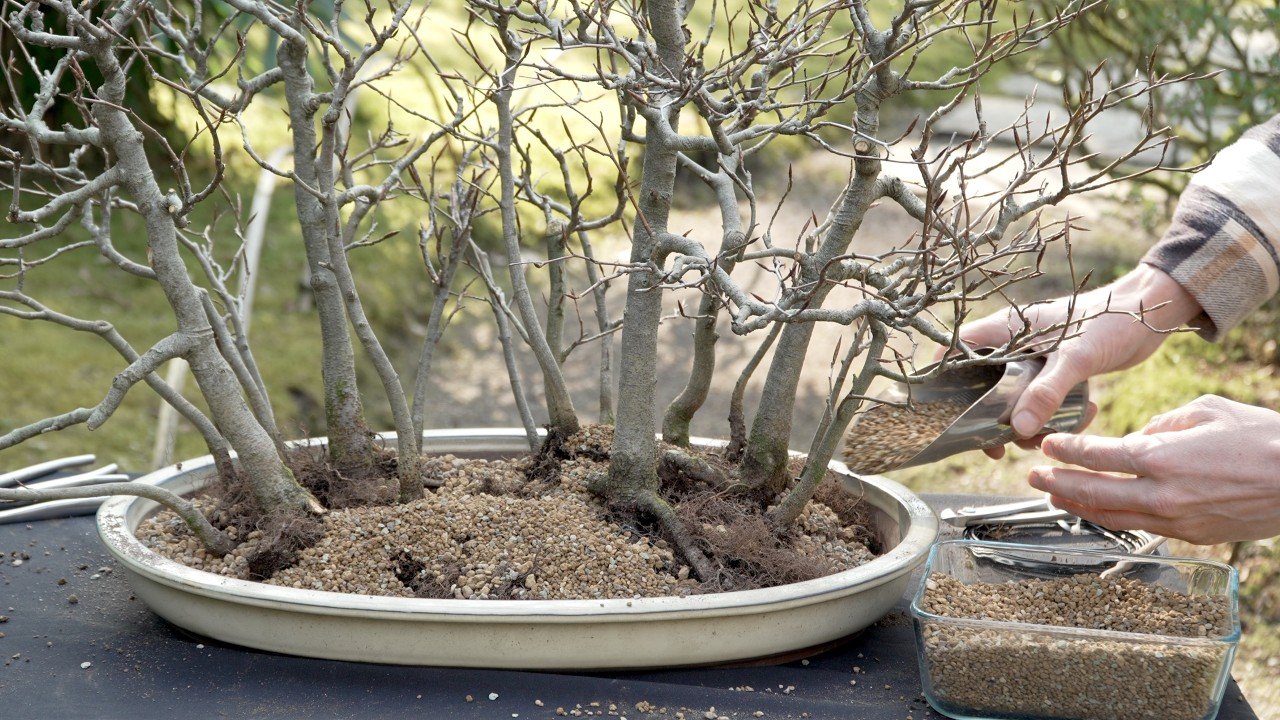
Most people encounter bonsai as a curiosity – a tree that looks like it belongs in a fairy tale, small enough to sit on a windowsill yet somehow carrying the presence of something ancient. What’s less widely understood is that bonsai isn’t a distinct species or a genetically dwarfed plant at all. It’s an ordinary tree – pine, juniper, maple, elm – shaped over years or decades through deliberate horticultural technique. The “miniature” appearance isn’t achieved through breeding; it’s achieved through pruning, wiring, root restriction, and an intimate understanding of how a tree actually grows.
Why bonsai is really a horticultural discipline, not a plant category
From a botanical standpoint, a bonsai pine and a full-sized pine of the same species are the same organism, subject to the same physiology. What differs is the environment the grower imposes on it. Root confinement in a shallow container limits vascular growth and vigor, which in turn keeps internode spacing tight and leaf or needle size proportionally small – a genuine physiological response, not an illusion. Regular pruning redirects the tree’s hormonal signaling (apical dominance) to encourage back-budding and denser ramification closer to the trunk, rather than the outward, leggy growth a tree would produce if left alone.
This is where bonsai becomes genuinely interesting from a plant-science perspective: it’s essentially applied horticultural physiology, refined by trial and observation over centuries before anyone had a modern vocabulary for auxin distribution or vascular cambium response. Growers were manipulating plant hormone pathways empirically long before the underlying biology was understood in a lab.
Age, growth, and why an old bonsai looks the way it does
One of the more counterintuitive facts about bonsai is that a well-formed specimen doesn’t stop growing – it simply channels that growth differently. Rather than increasing dramatically in size, a mature bonsai puts its biological energy into refinement: finer ramification, thicker and more textured bark, a stronger and more tapered trunk, and – in older specimens – natural deadwood features such as jin (dead branch stubs) and shari (exposed dead wood along the trunk) that develop through years of controlled stress and exposure.
This is also why age is such a defining factor in a bonsai’s value and character. Some of the oldest documented specimens in circulation today are estimated at several centuries old, and in rare, well-provenanced cases, over a thousand years – a timescale that reflects continuous, generational care rather than accelerated cultivation. There is no shortcut to that kind of maturity; the aged bark, deadwood texture, and root-flare development (nebari) that make an old bonsai visually compelling are the direct result of decades of biological time passing under a grower’s continued attention.
Indoor versus outdoor: a biology problem, not a marketing distinction
A common misconception is that bonsai is inherently an indoor plant. In reality, most classic bonsai species – pine, juniper, yew, maple – are temperate, outdoor trees that require a genuine dormancy period triggered by seasonal temperature and daylight changes. Keeping one of these species permanently indoors disrupts its natural dormancy cycle and, over time, weakens or kills it. What’s commercially marketed as “indoor bonsai” is typically a different category entirely – subtropical or tropical species such as Ficus, which tolerate stable indoor conditions precisely because they don’t rely on winter dormancy in the first place.
This distinction matters for anyone considering a bonsai purely on aesthetic grounds without accounting for the underlying biology: the growing conditions a species requires aren’t optional preferences, they’re the difference between a tree thriving for generations and one declining within a few seasons.
Why watering can’t be reduced to a schedule
Because bonsai are grown in shallow containers with limited soil volume, their moisture dynamics behave differently from a tree in open ground. Soil in a bonsai pot dries out faster and more unevenly, which is why experienced growers judge watering by substrate condition – checking moisture roughly a centimeter below the surface – rather than a fixed calendar interval. Overwatering and underwatering both show up quickly in a container this size, which is part of why bonsai pot cultivation is often used as an introductory case study in root-zone water relations within horticultural teaching contexts.
A living record of horticultural technique
What makes bonsai worth studying beyond its aesthetic appeal is that each specimen is effectively a physical record of the techniques applied to it – every wired branch, every pruning cut, every year of controlled stress leaves a lasting mark on the tree’s structure. In that sense, a mature bonsai is as much a documented process as it is a living object, which is part of why serious collectors and institutions place such weight on provenance and cultivation history rather than treating it as a purely decorative plant.
For those interested in seeing this principle carried through at a genuinely advanced level – centuries-old, documented Japanese specimens rather than nursery-grown substitutes – those looking to buy bonsai from specialist growers will find a useful reference point, including detailed context on species selection, age verification, and long-term care. The same discipline shows up at a larger scale in professional landscape architecture, where the same principles of long-term structure, restraint, and seasonal planning are applied across an entire garden rather than a single container specimen.
Conclusion
Bonsai sits at an unusual intersection of horticultural science and long-term craftsmanship – a discipline where physiological principles like hormonal signaling, root restriction, and dormancy cycles are applied deliberately, over years, to produce a specific structural and aesthetic outcome. Understanding the biology behind it doesn’t diminish the art; if anything, it makes clear just how much sustained technical skill sits behind a tree that, at first glance, simply looks small and old.

DNS Magazine News Admin shares informative and engaging content covering technology, business, lifestyle, digital marketing, and trending topics. Our goal is to provide readers with useful, reliable, and easy-to-understand information.