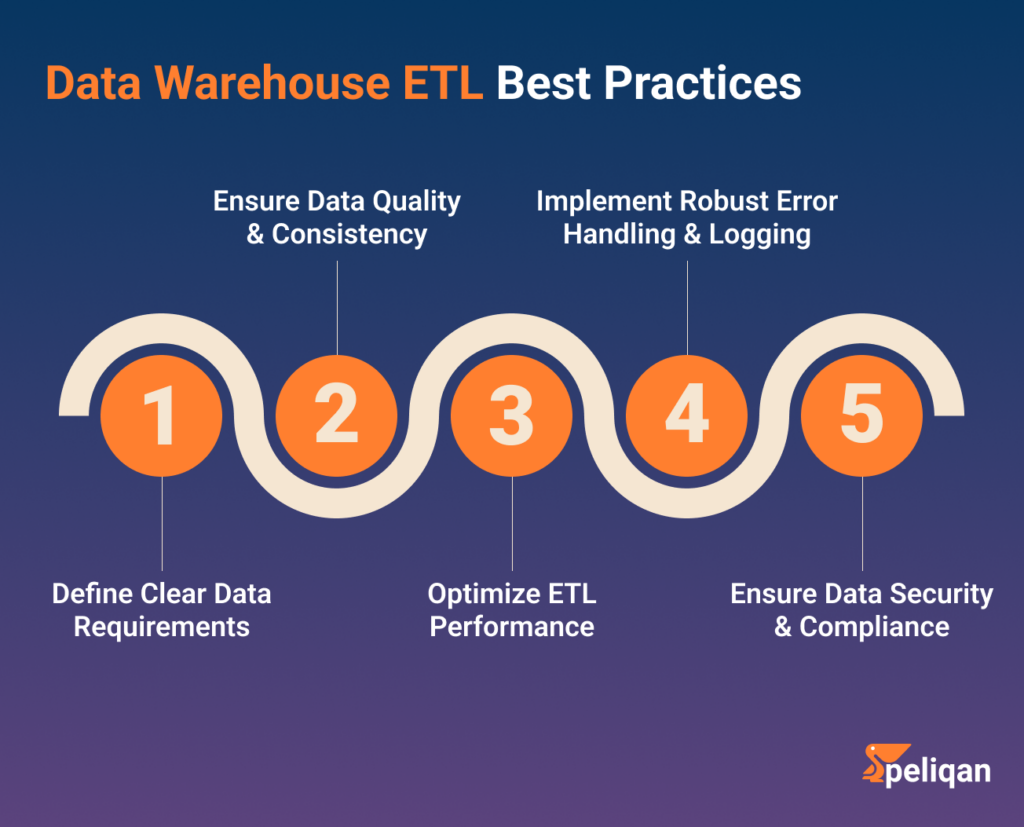
Modern businesses depend on data from multiple sources to make informed decisions, improve customer experiences, and optimize daily operations. However, collecting data is only the first step. Organizations also need reliable processes to extract, transform, validate, and load information into their target systems.
Following effective etl best practices can help data engineers build pipelines that are reliable, scalable, secure, and easier to maintain. Whether a company is working with cloud platforms, data warehouses, APIs, or traditional databases, a well-designed ETL process can significantly improve data management.
1. Understand Your Data Sources
The first step in building an effective data pipeline is understanding the sources that provide the data. These may include relational databases, APIs, cloud applications, CSV files, logs, or third-party platforms.
Before creating an ETL workflow, identify the structure, format, volume, frequency, and quality of the incoming data. Understanding these factors helps engineers design a pipeline that can process information efficiently.
2. Establish Clear Transformation Rules
Raw data often contains inconsistencies that need to be corrected before it can be used. Transformation rules should define how the data will be cleaned, standardized, filtered, and converted.
Common transformation tasks include:
- Removing duplicate records
- Handling missing values
- Standardizing formats
- Converting data types
- Normalizing inconsistent information
- Applying business rules
Clearly defined transformation logic also makes pipelines easier to test and maintain.
3. Prioritize Data Quality
Data quality should be considered throughout the entire pipeline. If inaccurate or incomplete information reaches the destination system, it can negatively affect analytics and business decisions.
Automated quality checks can verify record counts, required fields, data types, duplicate records, and unexpected values. These checks help identify problems before they become larger issues.
4. Use Incremental Loading
Processing an entire dataset every time a pipeline runs can waste computing resources and increase execution time. Incremental loading solves this problem by processing only new or modified records.
Techniques such as timestamps, change data capture, transaction IDs, and version numbers can help identify changes.
For large datasets, incremental processing can make ETL workflows significantly faster and more efficient.
5. Design for Scalability
Modern data environments can grow rapidly. A pipeline that works well with thousands of records may struggle when the organization begins processing millions or billions of records.
Data engineers should consider scalability from the beginning. Cloud infrastructure, distributed processing, partitioning, parallel execution, and efficient storage formats can help pipelines handle increasing workloads.
6. Implement Reliable Error Handling
Failures are common in data pipelines. Network interruptions, invalid data, API limits, database problems, and unexpected schema changes can all cause an ETL job to fail.
Reliable pipelines should include error handling, logging, retry mechanisms, and alerts. Failed records should be captured separately when possible so that engineers can investigate them without stopping the entire workflow.
7. Monitor Pipeline Performance
Monitoring is essential for maintaining modern data pipelines. Engineers should track important metrics such as processing time, record volume, failed jobs, resource usage, and data freshness.
Monitoring tools can also provide alerts when a pipeline takes longer than expected or fails repeatedly.
Regular performance analysis helps identify bottlenecks and opportunities for optimization.
8. Secure Data Throughout the Pipeline
Data security should be implemented during extraction, transformation, storage, and loading. Sensitive information should be protected from unauthorized access.
Use encryption, authentication, role-based access controls, secure credential storage, and appropriate permissions. API keys, passwords, and other credentials should never be hard-coded into ETL scripts.
9. Manage Schema Changes
Source systems can change over time. New columns may be added, existing fields may be renamed, or data types may change.
If these changes are not handled properly, they can break downstream processes. Schema validation and automated alerts can help engineers identify changes before they cause major problems.
Keeping data contracts and schemas documented also improves communication between teams.
10. Automate Testing
Testing should be part of every modern ETL workflow. Automated tests can verify whether transformations produce the expected results and whether incoming data meets defined quality requirements.
Useful tests include:
- Data type validation
- Null value checks
- Duplicate detection
- Record count comparisons
- Source-to-target validation
- Transformation testing
- Schema validation
Automated testing reduces the risk of introducing errors into production pipelines.
11. Maintain Documentation
Documentation makes data pipelines easier to understand, troubleshoot, and update. Engineers should document data sources, transformation rules, dependencies, schedules, schemas, and destination systems.
Good documentation is especially important for larger teams where multiple engineers may work on the same pipeline.
12. Use Version Control and Automation
ETL code and configuration should be managed using version control systems. This allows teams to track changes, review updates, and restore previous versions when necessary.
Automation can also improve deployment and scheduling. Instead of manually running data workflows, organizations can use orchestration tools to schedule jobs, manage dependencies, and monitor execution.
Benefits of Following ETL Best Practices
Applying these practices can provide several benefits, including:
- Better data quality
- Faster pipeline execution
- Improved scalability
- Easier troubleshooting
- Stronger data security
- Reduced operational costs
- More reliable analytics
- Easier pipeline maintenance
These improvements allow organizations to create a dependable data infrastructure that can support both current and future requirements.
Conclusion
Modern data pipelines need to handle growing data volumes, multiple sources, changing schemas, and increasingly complex business requirements. A well-designed ETL process helps organizations transform raw information into reliable and useful data.

DNS Magazine News Admin shares informative and engaging content covering technology, business, lifestyle, digital marketing, and trending topics. Our goal is to provide readers with useful, reliable, and easy-to-understand information.