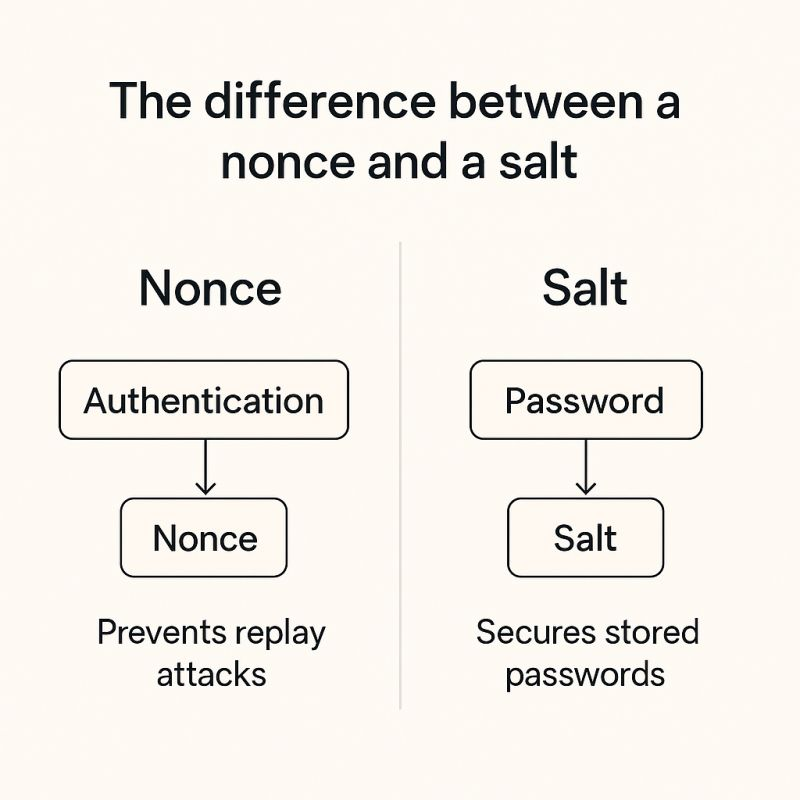
As cyber threats continue to evolve, protecting sensitive information has become a top priority for businesses and individuals alike. Every time you log into an online account, make a digital payment, or send encrypted information over the internet, multiple security mechanisms work together to keep your data safe. One of these important mechanisms is the nonce—a simple but highly effective element used in modern cryptography.
Many beginners exploring cybersecurity often ask what is a nonce in security because the term appears frequently in discussions about encryption, authentication, blockchain, and secure communication protocols. Although it may sound technical, the concept is straightforward. A nonce is a value that is used only once to ensure that every communication or transaction is unique.
This article explains what a nonce is, how it works, how it prevents replay attacks, and why it plays a critical role in protecting digital data.
Understanding a Nonce
The word “nonce” comes from the phrase “number used once.” In cybersecurity, a nonce is a randomly generated or sequential value that is used only one time during a cryptographic process.
Unlike passwords or encryption keys, a nonce does not need to remain secret. Instead, its purpose is to ensure uniqueness. Every time a secure communication takes place, a fresh nonce is generated so that no two requests are identical.
Because each nonce is unique, attackers cannot successfully reuse intercepted communications.
What Is a Nonce in Security?
Simply explained, what is a nonce in security It is a one-time-use value generated during authentication or encryption to make every request unique and protect systems from replay attacks and unauthorized access. A nonce helps verify that a message is fresh and has not been copied from an earlier communication.
This simple concept forms the backbone of many modern cybersecurity systems.
Why Are Nonces Important?
Modern cyberattacks often involve intercepting legitimate network traffic and attempting to reuse it later.
Without nonce protection, attackers could capture authentication requests or payment transactions and replay them multiple times.
A nonce prevents this by ensuring that every request contains a unique identifier.
Its key benefits include:
- Preventing replay attacks
- Strengthening authentication
- Improving encryption security
- Protecting online payments
- Securing API requests
- Supporting blockchain operations
- Enhancing digital signatures
These benefits make nonces an essential component of secure communication.
How Does a Nonce Work?
Understanding how a nonce works becomes easier with a simple example.
Imagine you’re logging into your online banking account.
The process looks like this:
- You enter your login credentials.
- The banking server generates a unique nonce.
- The nonce is sent to your device.
- Your device combines the nonce with encrypted authentication data.
- The response is returned to the server.
- The server validates both the authentication data and the nonce.
- The nonce immediately expires after successful verification.
If an attacker records this communication and attempts to resend it later, the server rejects it because the nonce has already been used.
Understanding Replay Attacks
A replay attack occurs when a hacker captures legitimate network traffic and retransmits it to trick the receiving system.
For example:
Suppose you authorize a payment of $500.
An attacker intercepts the payment request and sends the exact same request again.
Without nonce protection, the payment might be processed multiple times.
With nonce verification:
- Every payment request contains a unique nonce.
- The server stores previously used nonces.
- Duplicate requests are automatically rejected.
This makes replay attacks ineffective.
How Nonces Protect Data
Data protection is one of the primary reasons nonces are used in cybersecurity.
They help secure data by:
- Making every encrypted message unique
- Preventing duplicate transactions
- Protecting user authentication
- Securing communication sessions
- Reducing opportunities for attackers to manipulate traffic
Even if hackers intercept encrypted information, they cannot simply reuse it because the associated nonce is no longer valid.
Nonces in Cryptography
Cryptographic systems rely heavily on randomness.
Many encryption algorithms use nonces so that encrypting identical information multiple times produces different encrypted outputs.
Popular encryption methods that require nonces include:
- AES-GCM
- AES-CTR
- ChaCha20-Poly1305
- Authenticated Encryption with Associated Data (AEAD)
Without unique nonces, encrypted messages could reveal patterns that attackers might exploit.
Nonces in Authentication Systems
Modern authentication protocols use nonces to verify the freshness of login requests.
Examples include:
- Online banking
- Email services
- Enterprise identity systems
- Cloud platforms
- VPN authentication
- Multi-factor authentication (MFA)
Each login session receives a unique nonce, making it impossible to reuse captured authentication messages successfully.
Nonces in API Security
Today’s applications exchange information through APIs.
Secure APIs typically require each request to include:
- API key
- Timestamp
- Digital signature
- Nonce
When the server receives a request, it checks whether the nonce has already been used.
If it has, the request is rejected immediately.
This prevents attackers from repeating valid API requests.
Nonces in Blockchain Technology
Blockchain systems also rely on nonces.
In Bitcoin and other cryptocurrencies, miners continuously modify the nonce value while attempting to solve cryptographic puzzles.
The correct nonce generates a hash that satisfies the blockchain’s difficulty requirements.
This process helps:
- Validate transactions
- Secure blockchain networks
- Prevent fraud
- Maintain decentralized consensus
Without nonces, blockchain mining would not function effectively.
Best Practices for Using Nonces
Security experts recommend several best practices:
- Always generate cryptographically secure random values.
- Never reuse a nonce with the same encryption key.
- Validate every nonce received.
- Store used nonces temporarily to detect duplicates.
- Set expiration times for nonce values.
- Use trusted random number generators.
These practices maximize the security benefits of nonce-based systems.
Common Mistakes to Avoid
Even though nonces are simple, poor implementation can weaken security.
Common mistakes include:
- Reusing nonce values
- Using predictable numbers
- Failing to validate nonces
- Allowing expired nonces to remain valid
- Pairing reused nonces with the same encryption key
Avoiding these mistakes is essential for maintaining secure systems.
Real-World Applications
You encounter nonce technology more often than you might realize.
Examples include:
- Online banking transactions
- Secure email logins
- Cloud storage services
- Cryptocurrency wallets
- E-commerce payments
- Mobile applications
- Secure web sessions (HTTPS)
Each of these applications depends on nonces to verify that every request is original and authentic.
The Growing Importance of Nonces
As cyber threats become more advanced, nonces continue to play a crucial role in modern cybersecurity. Technologies such as cloud computing, Internet of Things (IoT), artificial intelligence, and decentralized finance rely on secure communication between devices and users. Nonces help ensure that every interaction remains unique, reducing the chances of fraud and unauthorized access.
Developers increasingly incorporate nonce-based security into web applications, APIs, and authentication systems because it offers a simple yet highly effective defense against common cyberattacks.
Conclusion
Understanding what is a nonce in security is essential for anyone learning about cybersecurity or cryptography. A nonce is a one-time-use value that helps secure digital communications by ensuring that every message, transaction, or authentication request is unique. This simple mechanism prevents replay attacks, strengthens encryption, and protects sensitive data from unauthorized use.

DNS Magazine News Admin shares informative and engaging content covering technology, business, lifestyle, digital marketing, and trending topics. Our goal is to provide readers with useful, reliable, and easy-to-understand information.