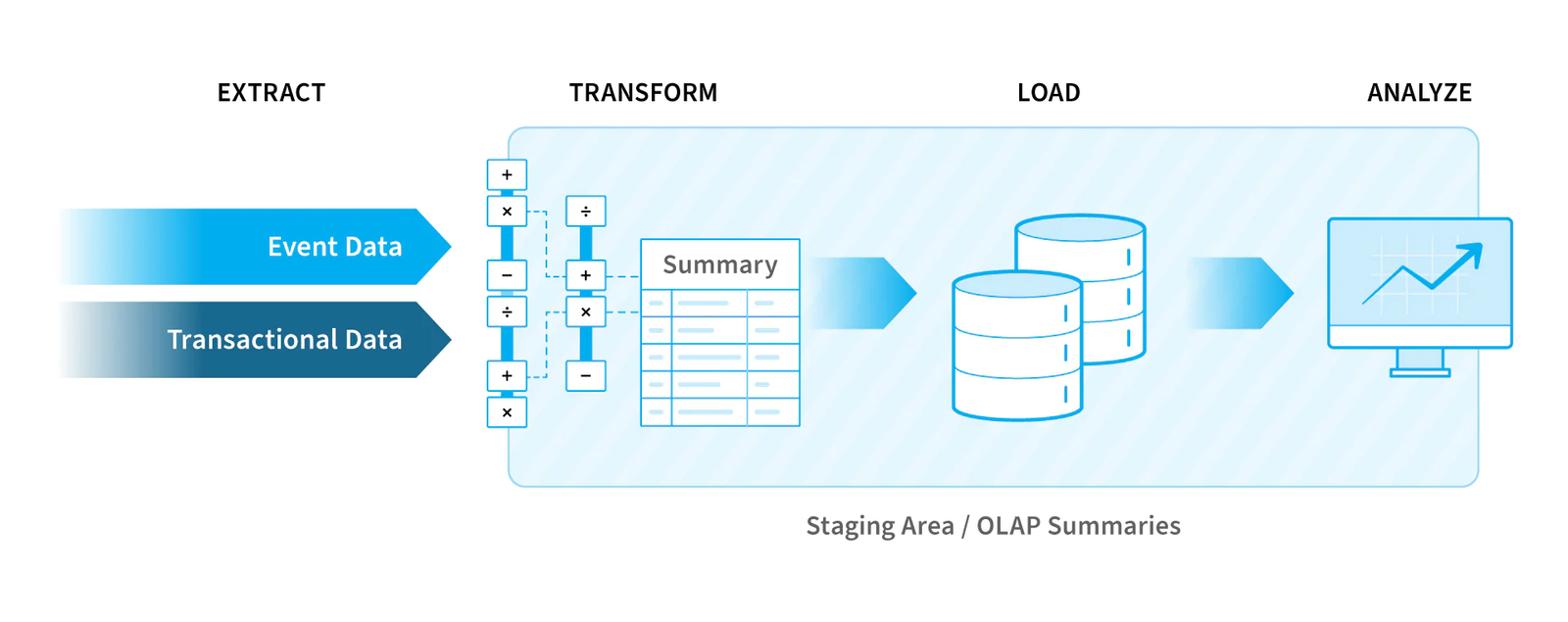
As organizations continue to generate massive amounts of data, the role of data engineers has become more important than ever. Businesses depend on accurate, timely, and well-structured data to support analytics, artificial intelligence, and strategic decision-making. ETL (Extract, Transform, Load) remains one of the most critical processes for managing and integrating data from multiple sources. In 2026, data engineers must adopt modern techniques and proven strategies to build faster, more secure, and scalable ETL pipelines.
By following ETL Best Practices, data engineers can improve data quality, reduce processing time, and ensure reliable integration across cloud and on-premises environments. This guide highlights the most important practices every data engineer should follow in 2026.
Understanding ETL in 2026
ETL is the process of extracting data from various sources, transforming it into a usable format, and loading it into a destination such as a data warehouse, data lake, or analytics platform.
Although the core ETL process remains the same, today’s data environments are far more complex than they were just a few years ago. Companies now collect data from cloud applications, IoT devices, customer relationship management (CRM) systems, APIs, social media platforms, and streaming services. Managing these diverse data sources requires efficient ETL pipelines that are flexible, scalable, and highly automated.
Why ETL Best Practices Matter
Poorly designed ETL workflows can create several challenges, including slow processing, duplicate records, inconsistent data formats, and inaccurate reports. These problems often result in poor business decisions and increased maintenance costs.
Implementing strong ETL practices provides many benefits:
- Higher data accuracy
- Faster data processing
- Improved scalability
- Better system performance
- Reduced operational costs
- Enhanced security
- Reliable business intelligence
For modern organizations, an optimized ETL pipeline is a valuable asset that supports long-term digital transformation.
Design Scalable Pipelines
Data volumes continue to grow rapidly each year. Data engineers should build pipelines capable of handling increasing workloads without requiring major redesigns.
Scalable ETL pipelines should support:
- Cloud storage integration
- Distributed computing
- Parallel processing
- Modular architecture
- Automatic resource scaling
Building with scalability in mind ensures that future business growth does not negatively impact performance.
Prioritize Data Quality
High-quality data is essential for meaningful analytics. Data engineers should integrate validation checks throughout every stage of the ETL process rather than only after loading the data.
Best practices include:
- Removing duplicate records
- Handling missing values
- Standardizing date and currency formats
- Validating business rules
- Eliminating inconsistent naming conventions
Reliable data improves reporting accuracy and increases confidence among stakeholders.
Automate ETL Processes
Automation has become a standard requirement in modern data engineering. Manual ETL execution increases the risk of human error and slows business operations.
Automated workflows can:
- Schedule recurring jobs
- Trigger pipelines automatically
- Send execution notifications
- Retry failed tasks
- Generate performance reports
Automation saves valuable time while ensuring consistent execution across environments.
Use Incremental Data Loading
Loading complete datasets every day is both inefficient and expensive. Instead, data engineers should implement incremental loading whenever possible.
Incremental loading processes only new or modified records, reducing:
- Processing time
- Network traffic
- Storage requirements
- System workload
This approach significantly improves ETL performance, especially for large enterprise databases.
Optimize Transformation Logic
Data transformation often consumes the largest share of ETL resources. Efficient transformation logic helps reduce execution time while maintaining data accuracy.
Optimization strategies include:
- Eliminating unnecessary calculations
- Breaking large workflows into smaller tasks
- Reusing transformation components
- Optimizing SQL queries
- Applying business rules efficiently
Simple and organized transformation logic also makes pipelines easier to maintain.
Monitor Pipeline Performance
Continuous monitoring allows data engineers to detect issues before they impact production systems.
Key performance indicators include:
- Job completion time
- Failed records
- CPU usage
- Memory utilization
- Processing speed
- Error frequency
Real-time monitoring tools help identify bottlenecks and improve pipeline reliability.
Implement Strong Security Measures
Protecting sensitive data has become increasingly important as businesses process financial, healthcare, and customer information.
Security measures should include:
- Encryption during data transfer
- Secure authentication
- Role-based access control
- Audit logging
- Compliance with privacy regulations
- Secure API connections
A secure ETL environment reduces the risk of data breaches and regulatory violations.
Improve Error Handling
Unexpected failures are unavoidable in large-scale data environments. Effective error handling prevents small issues from disrupting entire workflows.
Every ETL pipeline should include:
- Detailed logging
- Automatic retry mechanisms
- Failure notifications
- Exception tracking
- Recovery procedures
Separating failed records while allowing successful data to continue processing improves overall system reliability.
Document Every Workflow
Comprehensive documentation simplifies maintenance and helps new team members understand ETL processes quickly.
Documentation should cover:
- Source systems
- Destination databases
- Transformation rules
- Workflow diagrams
- Scheduling information
- Security policies
- Version history
Keeping documentation updated reduces troubleshooting time and improves collaboration across teams.
Leverage Cloud Technologies
Cloud platforms have transformed modern data engineering by providing scalable infrastructure and managed ETL Best Practices services.
Cloud-based ETL solutions offer advantages such as:
- Automatic scaling
- Lower infrastructure costs
- Faster deployment
- High availability
- Built-in security features
Data engineers should evaluate cloud-native ETL tools that align with organizational requirements and future growth plans.
Test Before Production
Thorough testing helps identify issues before ETL pipelines are deployed.
Testing should include:
- Unit testing
- Integration testing
- Performance testing
- Security testing
- Data validation
- User acceptance testing
Regular testing ensures that transformations produce accurate and consistent results under different workloads.
Keep Learning New Technologies
The data engineering field evolves rapidly. New frameworks, cloud services, and automation tools continue to emerge each year.
Successful data engineers should continuously improve their skills by:
- Learning modern ETL platforms
- Studying cloud architecture
- Understanding data governance
- Exploring AI-assisted automation
- Following industry trends
Continuous learning helps professionals stay competitive in an ever-changing technology landscape.
Conclusion
The growing demand for high-quality data makes ETL more important than ever in 2026. Organizations depend on efficient data integration to support analytics, reporting, and artificial intelligence initiatives. By implementing ETL Best Practices, data engineers can build scalable, secure, and high-performing pipelines that deliver accurate information quickly and reliably.

DNS Magazine News Admin shares informative and engaging content covering technology, business, lifestyle, digital marketing, and trending topics. Our goal is to provide readers with useful, reliable, and easy-to-understand information.